Skip to content

Tag Archives: japanese photography

the personal aesthetic

does one learn aesthetics or does aesthetics learn you? meaning: is aesthetics a panoply of ideas and concerns one encounters in a ripe and meaningful fashion, something to add to an artistic arsenal that will further give shape and weight to work made–or is it a different kind of encounter, a shocking familiarity, when you realize that a fully articulated way of thinking about something is one that you have always had and always carried with you, unawares. until that moment of encounter.

influences and confluences

to have the knowledge that you seek a particular vein of something is to be aware of not only your tastes, but what influences you, creates bias and division, separates one set of concerns from another. connoisseurship, perhaps, but also a little bit of greek wisdom: to know why you are drawn to specific things, [...]

what little girls want: the art of miwa yanagi

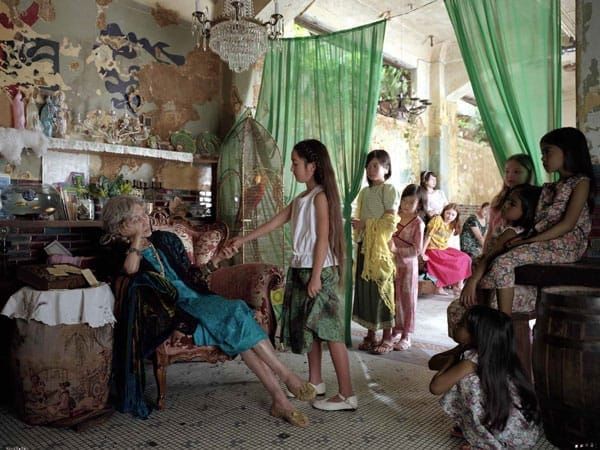
miwa yanagi creeps me out–in all the good kinds of ways. her images carry the capacity to go from surface to psychological in lightning-quick speed, and what lay in the subconscious afterwards folds into complex unease with a lingering, distinct aftertaste…her visual problem-solving mingled with her confidence in her questions and critque makes her among the most interesting and provactive image makers today.

correspondences

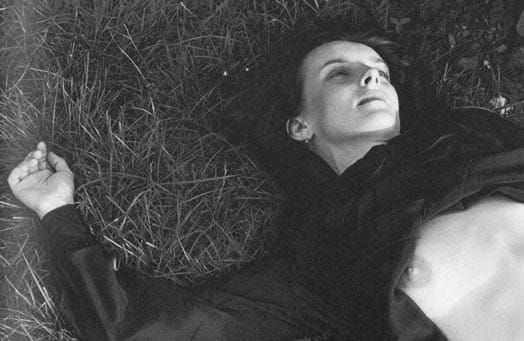
in the introductory essay to anne wilkes tucker’s encylopedic tome the history of japanese photography, the author asserts that araki and fukase both became known to the japanese because they were the first to show the “intimate homelife and personal emotional state of their subjects.” i also can’t help but meditate upon how, in absorbing eastern men reinterpret the tones of callahan’s portrait of his wife, they show something else of themselves, of the woman in front of them, and of east contemplating west. it’s amazing and a little humbling to consider just how revolutionary something so simple as an unguarded moment of one’s wife, captured on film, could revolutionize how an entire generation of photographers began to see, and it’s something i’ve loved thinking about ever since i came across these photographs.

the art of losing love, pt.2: seiichi furuya and christine gössler

i first came to seiichi furuya through his most famous image, the contact sheet that shows his wife’s suicide, or more precisely, shows him showing us his wife’s suicide. and then coming to him through all the questions which follow such a fantastically passive event. is it mediation? astonishment? a need to rely on something normal or everyday in order to understand, or assimilate, something unfathomable and out of time? stop time in order to stop life from happening at that very moment?

the art of losing love, pt.1 : words on masahisa fukase

i’ve been thinking about photographers in love, and the photographs they make while in that state. and also its shadow-twin: same photographer, making something out of a place of loss from that love. what is it to make a memory out of loss? to distill the precise ache of mourning? in photographs that become about loss‚Äîdid the losing already happen before the photo? did it happen in the course of it? is the photo then a document of loss? are these then the most documentary of all documentary images?

the philosopher and the trickster: daido moriyama and nobuyoshi araki

moriyama’s photographs consistently evoke dark, struggling identity-in-the-making. they are grainy, full of contrast, and seem to be about the eternal underside of things. araki’s photos, in contrast, seem to be puerile, joyous reaction against such moribund thoughts, and there is a playfulness evident throughout that suggests a lightness of heart that moriyama lacks. not that either is better or worse for the comparison, but that they are just…different.